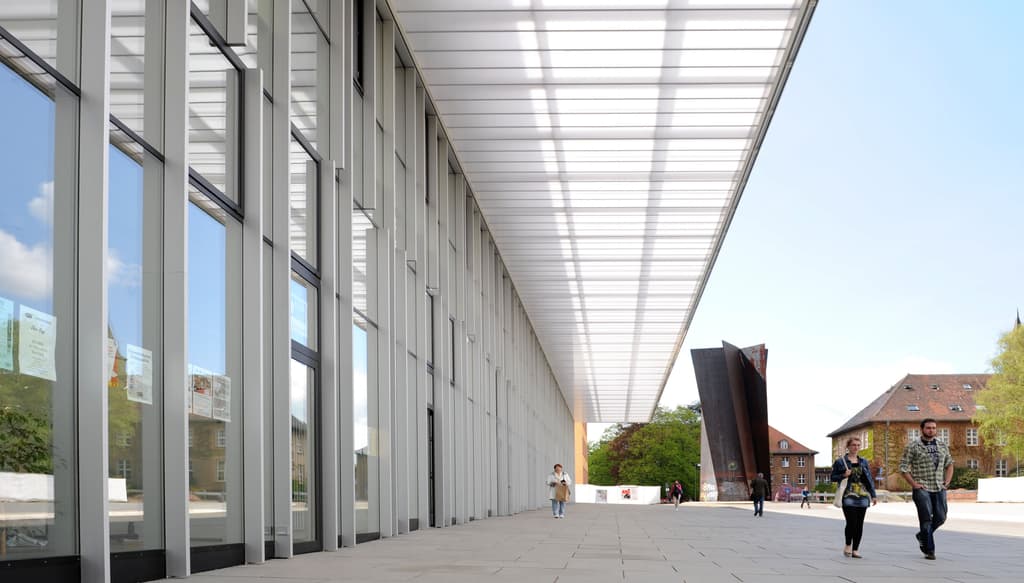
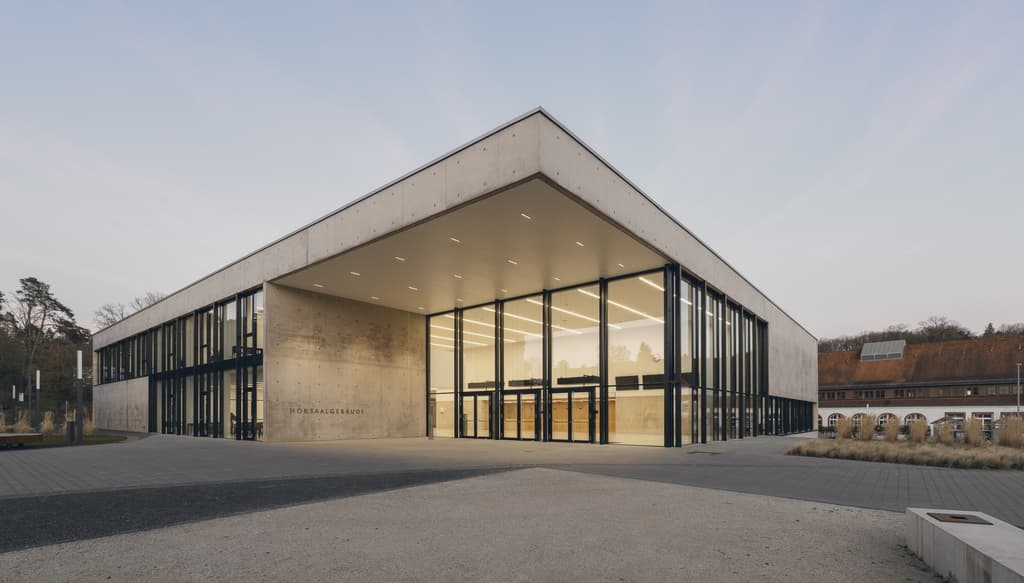
Saarland University is a campus university with an international reputation for research excellence, particularly in computer science and in the life sciences and nanosciences. The university is also distinguished by its close ties to France and its strong European focus. Around 17,000 students, studying over one hundred different academic disciplines, are currently enrolled at Saarland University. Saarland University is officially recognized as one of Germany’s family-friendly higher-education institutions and with a combined workforce of more than 4000 it is one of the largest employers in the region.
The Chair of Energy Materials is inviting applications for the following position commencing at the earliest opportunity.
Doctoral Research Position (m/f/x)
Reference number W2917, salary in accordance with the German TV-L salary scale¹, pay grade: E13 TV-L, duration of employment: 3 years, volume of employment: 50 % of standard working time.
Workplace/Department:
Chair of Energy Materials
The transition to a climate-neutral society is unthinkable without breakthrough energy storage technologies. At the Chair of Energy Materials, we are working on exactly that: the development of advanced materials that will power the next generation of green energy systems. Join us in shaping the future of energy storage from sustainable battery chemistries to innovative recycling strategies.
Your task: Next-Generation Battery Materials for a Sustainable Future
You will dive into the synthesis and characterization of novel battery materials that go far beyond conventional lithium-ion systems. This interdisciplinary PhD project addresses central challenges of the energy transition, including alternative battery chemistries (e.g., sodium-ion, magnesium-based systems), solid-state electrolytes, and circular recycling strategies.
Job requirements and responsibilities:
• Designing and characterizing novel electrode materials or electrolytes for post-Li technologies
• Advancing circular battery concepts (e.g., direct recycling, recovery of critical raw materials)
• Fabrication of battery electrodes (water-based binder systems, dry electrodes, free-standing)
• Structural and electrochemical characterization using state-of-the-art instrumentation, including X-ray diffraction, Raman spectroscopy, and Scanning electron microscopy
• Active participation in the research activities of the group and collaboration with external partners
• Publish scientific papers and present results at international conferences
Your academic qualifications:
• Completed scientific university studies in Chemistry, Materials Science, Physics, Chemical Engineering, or related fields
• Language skills (according to GER): English (C1)
The successful candidate will also be expected to:
• Hands-on experience in electrochemistry, material characterization (e.g., XRD, SEM, BET), or process engineering is advantageous
• Strong motivation for sustainable technologies and interdisciplinary collaboration
• Independent, analytical mindset and proficiency in English
What we can offer you:
• A flexible work schedule allowing you to balance work and family, among other things the possibility of teleworking
• Secure and future-oriented employment with attractive conditions
• A broad range of further education and professional development programmes (for example language courses)
• An occupational health management model with numerous attractive options, such as our university sports programme
• Supplementary pension scheme (RZVK)
• Discounted tickets on local public transport services (‘Job-Ticket‘ of the saarVV)
• Job bike leasing (JobRad)
We look forward to receiving your meaningful online application (in a PDF file) by 09.11.2026 to < e-mail verwijderd om veiligheidsredenen >. Please include the reference number W2917 in the subject line of the e-mail.
If you have any questions, please contact us for assistance. Your contact:
Herr Prof. Dr. Volker Presser
Materials Science and Engineering
Email: < e-mail verwijderd om veiligheidsredenen >
¹ TV-L = collective agreement on remuneration of public sector employees in the German Länder
The pay grade assigned to an employee depends on their professional qualifications and the number of years of service. Each pay grade is further subdivided into levels. Entry-level employees with no previous experience will initially be assigned a level 1 rating. After one year at level 1 of the E10 pay grade, an employee will move up to level 2. After a further two years, the employee will move to level 3, etc.
Pay grade classification is based on the particular details of the position held and the extent to which the applicant meets the requirements of the pay grade within the TV-L salary scale. Part-time employment is generally possible.
If you have obtained a foreign university degree, a proof of the equivalence of this degree with a German degree by the Zentralstelle für ausländisches Bildungswesen (ZAB) is needed before hiring. If necessary, please apply for this in time. You can find more information at https://www.kmk.org/zeugnisbewertung.
Unfortunately, neither costs for attending an interview at Saarland University nor costs for any certificate evaluation by the ZAB can be reimbursed in principle.
We welcome applications regardless of gender, nationality, ethnic and social origin, religion/belief, disability, age, and sexual orientation and identity. In accordance with its policy of increasing the proportion of women, the University actively encourages applications from women. Applications from severely disabled persons will be given preferential consideration in the event of equal suitability.
When you submit a job application to Saarland University you will be transmitting personal data. Please refer to our privacy notice for information on how we collect and process personal data in accordance with Art. 13 of the Datenschutz-Grundverordnung. By submitting your application you confirm that you have taken note of the information in the Saarland University privacy notice.