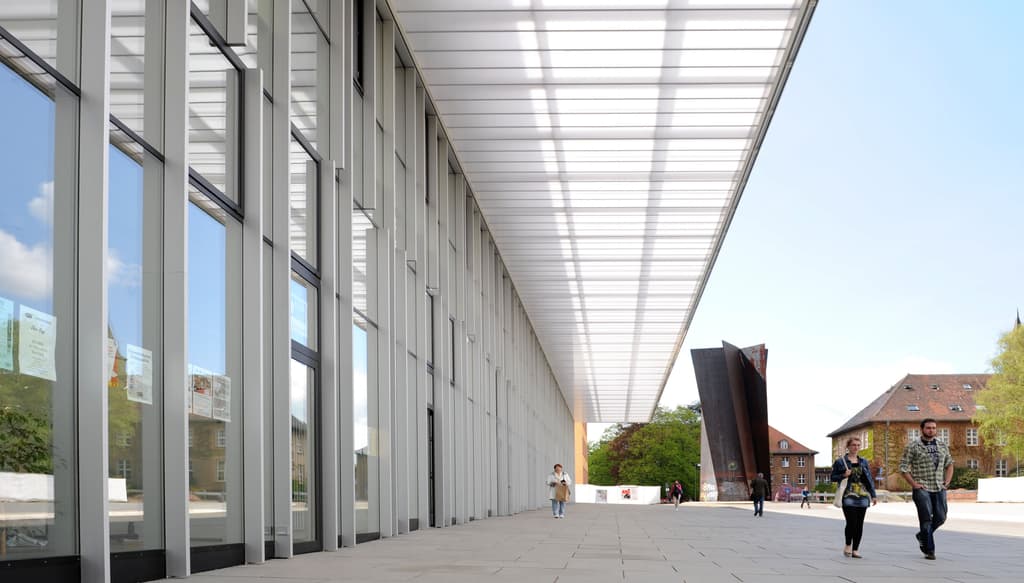
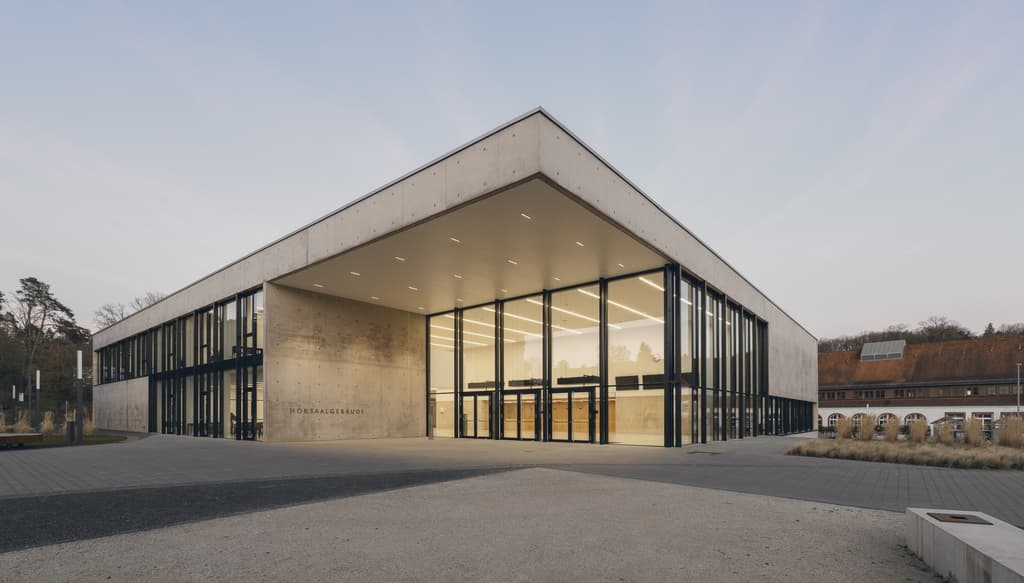
Saarland University is a campus university with an international reputation for research excellence, particularly in computer science and in the life sciences and nanosciences. The university is also distinguished by its close ties to France and its strong European focus. Around 17,000 students, studying over one hundred different academic disciplines, are currently enrolled at Saarland University. Saarland University is officially recognized as one of Germany’s family-friendly higher-education institutions and with a combined workforce of more than 4,000 it is one of the largest employers in the region.
The newly established Chair of Data-Driven Simulation and Analysis in Materials Science (Prof. Dr. Roland Aydin) at Saarland University, jointly affiliated with the German Research Center for Artificial Intelligence (DFKI), is inviting applications for the following position commencing at the earliest opportunity:
Academic Research Assistant (m/f/x)Reference number W2879, salary in accordance with the German TV-L salary scale¹, pay grade: E13 TV-L, duration of employment: 3 years (with the option of extension), volume of employment: 100 % of standard working time
Workplace/Department:
Saarland University, Chair of Data-Driven Simulation and Analysis in Materials Science
Subject Area: Foundation Models and Agentic AI for Physical Systems
Your responsibilities:
What we work on
Our group develops LLMs and agentic AI systems for scientific discovery, engineering and physical systems.
We investigate how AI can reason about scientific problems, interact with simulation software and support the design of complex physical systems. The group is jointly embedded at Saarland University and DFKI in Saarbrücken.
Current research directions include:
- AI for scientific computing – neural operators and learning-based surrogates for physical systems
- LLMs and scientific agents – large language models that autonomously reason, plan and execute scientific workflows
- AI for engineering design – LLM-driven agents for autonomous optimization and design of materials, structures and processes
- Multimodal scientific AI – integrating language, images, sensor data and simulations
- Alignment for scientific AI – scalable oversight, verification and control of LLM-based agents
- AI for materials discovery – generative models, active learning and autonomous discovery of novel materials
We welcome applications from candidates whose interests align with one or more of these research directions and who are excited about advancing the interface between artificial intelligence and the natural sciences.
Your potential responsibilities- Pursue an independent research project and develop your own research line within one of the research directions above or a closely related area
- Develop, train and evaluate modern machine learning models on GPU/HPC infrastructure, including graph neural networks, transformers, neural operators, diffusion models and foundation-model-based systems, and where relevant combine them with numerical simulation and scientific computing workflows
- Publish your research in leading venues (e.g. NeurIPS, ICML, ICLR, AAAI, npj Computational Materials) and present your work at international conferences
- Contribute to collaborative research projects with our close partners at EPFL and Hamburg University of Technology and help shape future research initiatives and funding proposals
- Support teaching, co-supervise students (PhD, Master's and Bachelor's level, as appropriate to your experience) and collaborate actively across Saarland University, DFKI, Saarland Informatics Campus and international partners
Your profile:
Requirements
- Doctoral degree (PhD) in one of the above disciplines, with a demonstrated research record at the interface of AI and science
- Language skills (according to CEFR): English at C1 level
You also bring:
- Solid foundations in machine learning and deep learning, together with an interest in scientific computing, numerical simulation, computational engineering or computational materials science
- Strong programming skills in Python, both with vibe coding and without, as well as experience with PyTorch (or JAX/TensorFlow) and the scientific Python ecosystem
- An independent and structured working style, strong communication skills and genuine enthusiasm for interdisciplinary research
- Excellent English skills for research, scientific writing and collaboration; German language skills are not required at the time of hiring
- Ideally, publications, open-source contributions or practical experience with diffusion models, foundation models, LLM fine-tuning, agentic AI systems or scientific simulation software
We offer you:
- flexible working hours to help balance work and family life, including the possibility of teleworking,
- a secure and future-oriented workplace with attractive conditions,
- extensive further education and professional development opportunities (e.g. language courses),
- attractive offers as part of our occupational health management programme, such as university sports,
- supplementary pension scheme (RZVK),
- discounted tickets for public transport (Job-Ticket),
- JobRad bicycle leasing.
We look forward to receiving your meaningful online application (in a single PDF file, max. 10 MB) by 15.08.2026 at < email deleted for security reasons >. Please include the reference number W2879 in the subject line of your e-mail.
Please include the following documents:
- A short motivation letter (maximum two pages) stating which research direction interests you most, or proposing your own
- A CV including a publication list (please highlight your three most relevant publications)
- PhD certificate or confirmation of submission
- Names and contact details of three academic referees
- Optional: links to your GitHub profile, personal website or preprints
If you have any questions, please do not hesitate to contact us. Your contact persons are:
Prof. Dr. Roland Aydin
Chair of Data-Driven Simulation and Analysis in Materials Science, Saarland University
E-mail: < email deleted for security reasons >
Susanne Kern-Schumacher
Tel.: +49 681 302 70500
Pay grade classification is based on the particular details of the position held and the extent to which the applicant meets the requirements of the relevant pay grade within the TV-L salary scale. Part-time employment is generally possible.
If you have obtained a foreign university degree, proof of the equivalence of this degree with a German degree issued by the Zentralstelle für ausländisches Bildungswesen (ZAB) is required before employment can commence. If necessary, please apply for this in good time. Further information is available at https://www.kmk.org/zeugnisbewertung.
Unfortunately, costs incurred for attending an interview at Saarland University, as well as any costs associated with a certificate evaluation by the ZAB, cannot generally be reimbursed.
We welcome applications regardless of gender, nationality, ethnic and social origin, religion or belief, disability, age, sexual orientation or identity. In accordance with its equal opportunities policy, Saarland University aims to increase the proportion of women in areas where they are underrepresented. Applications from severely disabled persons are expressly encouraged and will be given preferential consideration in the event of equal suitability.
When you apply for a position at Saarland University, you transmit personal data. Please refer to our privacy notice in accordance with Art. 13 of the General Data Protection Regulation (GDPR) regarding the collection and processing of personal data. By submitting your application, you confirm that you have taken note of Saarland University’s privacy notice.
¹ TV-L = Collective Agreement on Remuneration of Public Sector Employees in the German Länder.