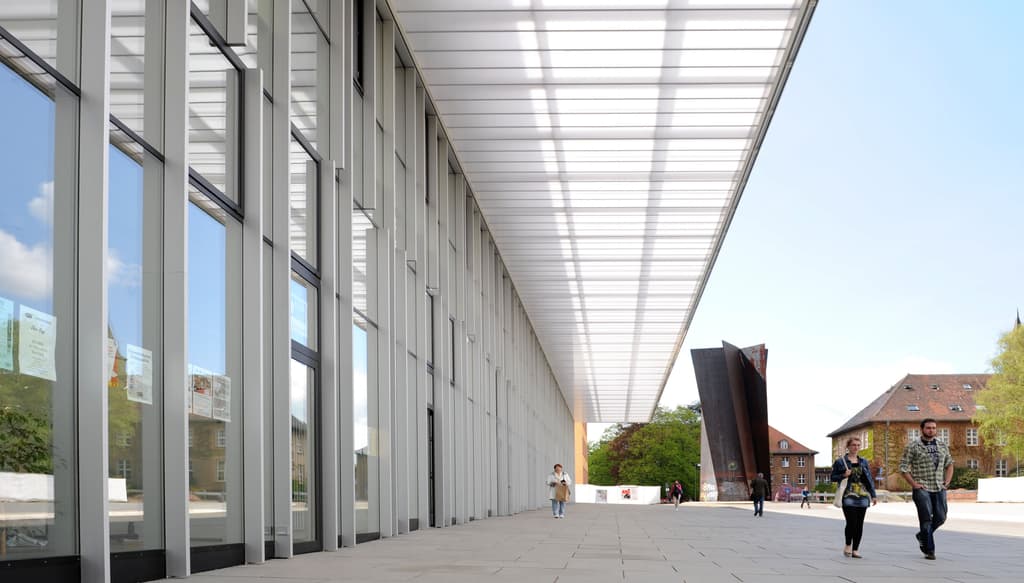
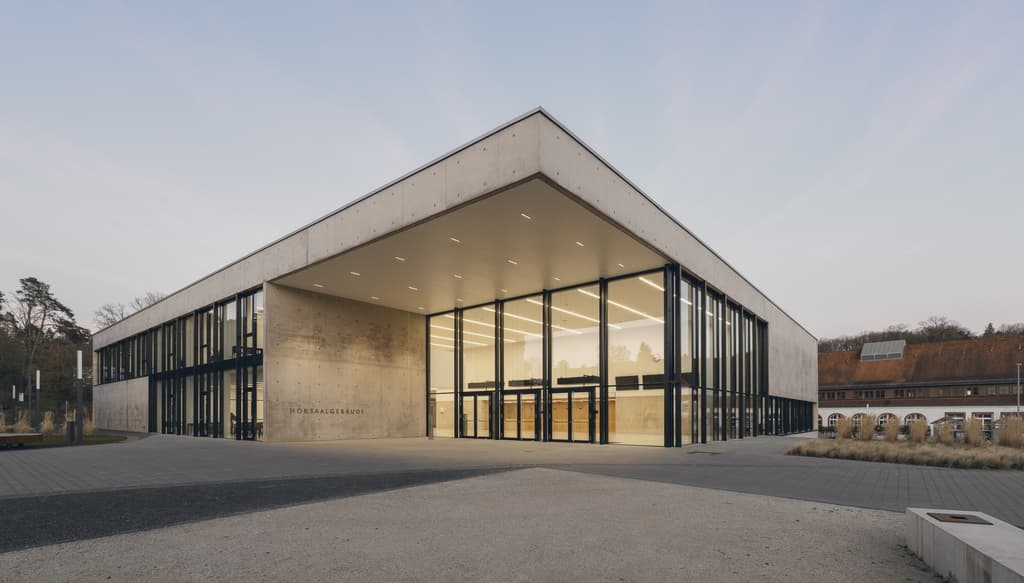
Saarland University is a campus university that is internationally recognized for its strong research programmes. Fostering young academic talent and creating ideal conditions for teaching and research are a core part of the university’s mission. As part of the University of the Greater Region, Saarland University enables students and staff to share and exchange knowledge and ideas between disciplines, between universities and across borders. With over 17,000 national and international students studying more than a hundred different academic disciplines, Saarland University is a diverse and dynamic learning environment. Saarland University is officially recognized as one of Germany’s family-friendly higher-education institutions and, with a combined workforce of more than 4,000, it is one of the largest employers in the region.
The Ubiquitous Media Technology Lab of Prof. Dr.-Ing. Antonio Krüger (Saarland Informatics Campus) is inviting applications for the following position, expected to start on 01 November 2026:
Doctoral Research Position (m/f/x)Reference number W2896, salary in accordance with the German TV-L salary scale¹, pay grade: E 13 TV-L, duration of employment: 3 years (fixed-term), volume of employment: 100 % of standard working time
Workplace/Department:
Ubiquitous Media Technology Lab, Saarland Informatics Campus, Saarbrücken
Job requirements and responsibilities:
Can technology learn to listen to how athletes feel, and not just to what the sensors measure?
In the ASPIRE project, we develop knowledge for the new generation of sports tracking technology that integrates athletes’ subjective experiences (such as perceived exertion, motivation, enjoyment and fatigue) with objective physiological and biomechanical data. ASPIRE is a collaboration between Saarland University and the University of Twente (Netherlands), funded under the DFG–NWO WEAVE programme.
As a doctoral researcher, you will be responsible for the machine-learning and data-science side of the project. You will design the system architecture and computational models that turn multi-modal data into timely, explainable feedback: a backend and APIs for heterogeneous data streams, an athlete state model that predicts future athlete states, and a recommendation engine that generates adaptive training and feedback suggestions. You will train and evaluate these interpretable models on data collected in real-world studies.
This role therefore calls for strong programming skills (e.g. in Python) and experience with data pipelines, APIs and backend development. An interest in human-centered computing, wearables and sensing — and ideally in sports, health or physiological data — will help you connect the technical work to the athletes it serves. As ASPIRE is an inherently interdisciplinary and international project, we are looking for someone who brings enthusiasm for collaborating with HCI researchers and sports scientists, along with a commitment to rigorous, ethical and reproducible research.
You will work closely with a postdoctoral researcher at the University of Twente (Netherlands) who focuses on the human-computer interaction side, and you will help coordinate the joint work across the two teams. The position offers a strong publication trajectory at leading venues (e.g. CHI, UIST, UbiComp, RecSys, SportsHCI) and a stimulating international research environment at the Ubiquitous Media Technology Lab.
Your tasks:
• Design and implement backend infrastructure and APIs for acquiring and storing heterogeneous, multi-modal data (past activities, physiological and psychological data), in compliance with data-protection regulations.
• Develop methods that predict future athlete states using interpretable machine learning.
• Build a recommendation engine that delivers adaptive, explainable training and feedback suggestions.
• Integrate the computational models with user interfaces, support in-the-wild data collection, and train and refine the models on the resulting data.
• Publish and present results at leading international conferences and contribute to open datasets and dissemination.
Your academic qualifications:
• Completed scientific university studies in computer science, data science, or a closely related field (Master’s degree or equivalent)
• A solid background in machine learning and data science; experience with interpretable models (e.g. regression, random forests, gradient boosting, case-based reasoning) is an advantage.
The successful candidate will also be expected to:
• Collaborate closely with the partner team at the University of Twente (Netherlands) and help coordinate the joint work packages.
• Be willing to travel for project meetings with the Dutch partner several times during the project.
• Contribute to the supervision of student assistants and to project dissemination and outreach.
• Pursue and complete a doctoral degree (Dr.-Ing. / PhD) within the framework of the project.
• Have an excellent command of English, both written and spoken.
• Have a basic knowledge of German (not strictly required).
What we can offer you:
• The opportunity to pursue a doctoral degree within the framework of the project
• Secure and future-oriented employment with attractive conditions
• A broad range of further education and professional development programmes (for example language courses)
• An occupational health management model with numerous attractive options, such as our university sports programme
• Supplementary pension scheme (RZVK)
• Discounted tickets on local public transport services (“Job-Ticket” of the saarVV)
• Job bike leasing (JobRad)
• A flexible work schedule allowing you to balance work and family, including the possibility of teleworking
We look forward to receiving your meaningful online application (in a PDF file) by 14 August 2026 to < E-Mail aus Sicherheitsgründen gelöscht >. Please include the reference number W2896 in the subject line of the e-mail.
Interviews will take place in the week of 24 August 2026.
If you have any questions, please contact:
Dr. Felix Kosmalla
Ubiquitous Media Technology Lab
DFKI, Campus D3 2, Saarbrücken
E-mail: < E-Mail aus Sicherheitsgründen gelöscht >
Tel.: +49 681 85775 5014
Pay grade classification is based on the particular details of the position held and the extent to which the applicant meets the requirements of the pay grade within the TV-L salary scale.
Part-time employment is generally possible.
If you have obtained a foreign university degree, proof of the equivalence of this degree with a German degree issued by the Zentralstelle für ausländisches Bildungswesen (ZAB) is required before employment. If necessary, please apply for this in good time. More information can be found at https://www.kmk.org/zeugnisbewertung.
Unfortunately, costs incurred for attending an interview at Saarland University, as well as costs for any certificate evaluation by the ZAB, cannot generally be reimbursed.
We welcome applications regardless of gender, nationality, ethnic and social origin, religion/belief, disability, age, sexual orientation or identity. In accordance with its equal opportunities policy, Saarland University actively seeks to increase the proportion of women in academic and professional positions. Applications from severely disabled persons will be given preferential consideration where qualifications are equal.
When you submit a job application to Saarland University, you will transmit personal data. Please refer to our privacy notice in accordance with Article 13 of the General Data Protection Regulation (GDPR) regarding the collection and processing of personal data. By submitting your application, you confirm that you have taken note of Saarland University’s privacy notice.
¹ TV-L = Collective agreement on remuneration of public sector employees in the German Länder.